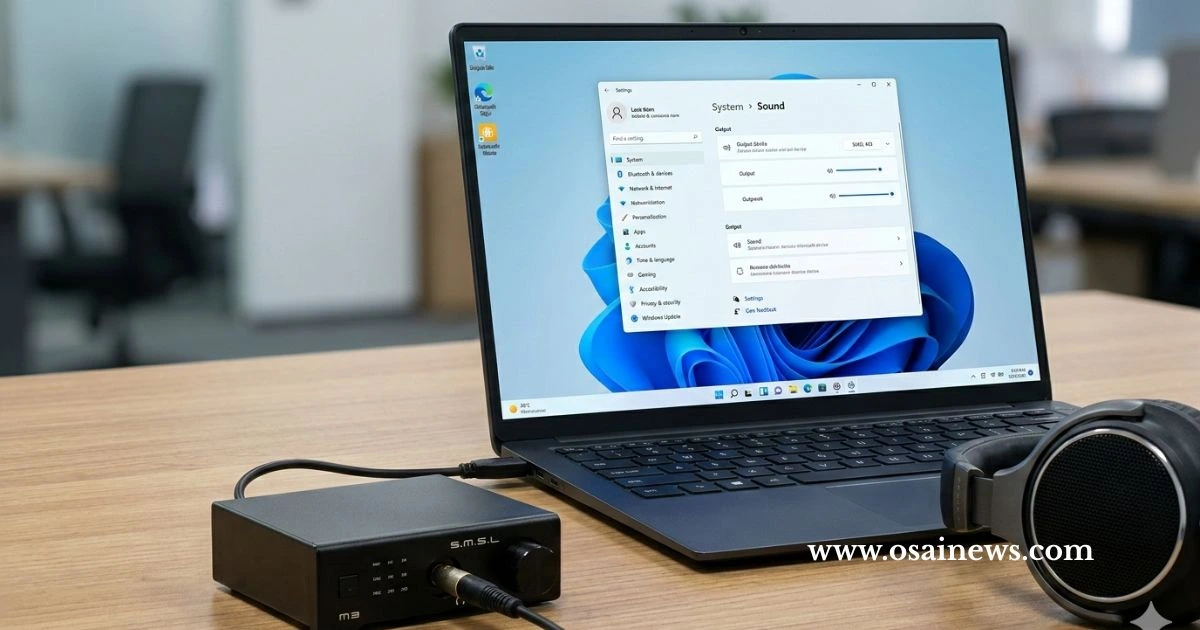
How to Use smsl m3 windows 11 – Complete Setup & Fix Guide
Table of Contents
You finally unboxed your SMSL M3. It sits on your desk looking exactly as good as the reviews promised — compact, solid, that satisfying volume knob right in the center. You plug the USB cable in, fire up Windows 11, and wait for that first hit of clean, amplified audio.
Instead, you get silence. Or worse — a crackling mess. Maybe Windows 11 doesn’t even acknowledge the thing exists.
That frustration is completely valid. The SMSL M3 is a genuinely capable DAC/amp combo, but Windows 11 has quirks that trip up even experienced users. Driver conflicts, sample rate mismatches, USB power management quietly killing your connection — these aren’t signs that your unit is broken. They’re fixable, and this guide walks you through every step.
What Is the SMSL M3 and Why Does Windows 11 Complicate Things?
The SMSL M3 is a USB DAC and headphone amplifier rolled into one unit. It supports PCM audio up to 96kHz/24-bit, which puts it solidly in audiophile territory without requiring a second mortgage. It’s built for people who want real improvement over their motherboard’s onboard audio — and it delivers, when configured correctly.
Windows 11 introduced tighter driver signing requirements and changed how it handles USB audio class devices compared to Windows 10. On top of that, its aggressive power management features can interfere with USB audio connections. Windows Update has also been known to silently override audio settings after major patches. None of this is insurmountable — you just need to know where to look.
What You Need Before You Start
Before touching any settings, make sure you have the basics covered:
- A USB-B to USB-A cable (the one that came in the box works fine)
- Your headphones or powered speakers connected to the M3’s output
- A direct USB port on your PC — skip the USB hub, at least for setup
- Windows 11 fully updated (paradoxically, an outdated Windows 11 causes more driver conflicts than an updated one)
| Requirement | Recommended Spec |
|---|---|
| Windows Version | Windows 11 21H2 or later |
| USB Port | USB 2.0 or 3.0, directly on motherboard |
| Driver Type | USB Audio Class 2.0 or SMSL official |
| .NET Framework | 4.8 or higher |
| Windows Update | Fully current before setup |
Step-by-Step: Setting Up SMSL M3 on Windows 11
Step 1 – Physical Connection
Power off the M3 before you connect it. Plug the USB cable into a rear port on your desktop or a direct port on your laptop. Front panel USB ports on desktops are known to cause intermittent recognition issues with DACs.
Once connected, power the M3 on. You should see the LED indicator light up. That’s your first confirmation the device is receiving power.
Step 2 – Let Windows 11 Detect the Device
Windows 11 should automatically detect the SMSL M3 as a USB audio device within a few seconds. To verify:
- Press Windows + X and open Device Manager
- Expand Sound, video and game controllers
- Look for SMSL M3 or USB Audio Device in the list
If it appears without a yellow exclamation mark, Windows has recognized it cleanly.
Step 3 – Set SMSL M3 as Your Default Audio Device
Windows 11 won’t automatically switch your output to the M3 — you have to tell it to.
- Right-click the speaker icon in your taskbar
- Select Sound Settings
- Under Output, click the dropdown and select SMSL M3
- Scroll down and click More sound settings
- In the Playback tab, right-click SMSL M3 and choose Set as Default Device
- Repeat and also set it as Default Communication Device
Step 4 – Set the Correct Sample Rate
This step is where most people go wrong. A mismatched sample rate between Windows and your M3 is the number one cause of crackling, distortion, and dropouts.
- In Sound Settings, click on the SMSL M3 output
- Select Additional device properties
- Go to the Advanced tab
- Set the audio format to 24-bit, 96,000 Hz (Studio Quality).
Match this to your music library’s native resolution if you know it. Mismatches force Windows to resample audio on the fly, which degrades quality noticeably.
Step 5 – Test Your Output
Use the built-in Windows audio test first (in the same properties window, hit Test). Then play a high-quality audio file — FLAC or lossless if you have one. Clean output should sound immediate, clear, and free of any background hiss at moderate volume levels.
SMSL M3 Driver Setup on Windows 11
Do You Actually Need a Driver?
The SMSL M3 is USB class-compliant, which means Windows 11 can run it using its built-in USB Audio Class 2.0 driver — no download required. For basic listening, this works fine.
However, if you want ASIO support, exclusive mode playback, or you’re using the M3 for audio production, you’ll want the official SMSL driver installed.
Installing the Official SMSL Driver
- Go to the SMSL official website and navigate to the M3 product page
- Download the Windows driver package (confirm it’s labeled for Windows 10/11)
- Right-click the installer and choose “Run as administrator.”
- Follow the on-screen prompts and restart your PC when asked
- After reboot, open Device Manager and confirm the M3 appears under Sound, video and game controllers with no warnings
If the installer flags a driver signing issue, you may need to temporarily disable Driver Signature Enforcement through Windows 11‘s advanced startup options — a process that takes about two minutes and is completely reversible.
Fixing Common SMSL M3 Problems on Windows 11
SMSL M3 Not Recognized
- Switch to a different USB port, ideally one at the back of your PC
- Uninstall the USB controller in Device Manager and let Windows reinstall it
- Go to Control Panel → Power Options → Change plan settings → Change advanced power settings, find USB settings, and set USB selective suspend to Disabled
No Sound Output
- Double-check that M3 is set as both default playback and communication device
- Check the physical volume knob — it’s an easy thing to overlook
- Open Sound Settings and check per-app audio output (some apps override the system default)
Crackling or Popping Audio
- Confirm your sample rate settings match (Step 4 above)
- Go to Device Properties → Enhancements and check Disable all sound effects
- If using a USB 3.0 port and experiencing interference, try USB 2.0
Random Disconnections
- Disable USB selective suspend (described above)
- Replace your USB cable if it’s a cheap third-party one
- Update your motherboard’s USB and chipset drivers
Windows Update Broke Everything
- Go to Settings → Windows Update → Update History → Uninstall Updates and roll back the most recent audio-related update
- Reinstall your SMSL driver after any major Windows update as a habit
| Problem | Root Cause | Fix |
|---|---|---|
| Not recognized | USB port or driver conflict | Change port, reinstall driver |
| No sound | Wrong default device | Set M3 as default output |
| Crackling audio | Sample rate mismatch | Match bit depth and Hz |
| Random disconnects | USB power management | Disable selective suspend |
| Broken after update | Driver overwritten | Reinstall SMSL driver |
Getting the Best Audio Quality from Your SMSL M3
Enable WASAPI Exclusive Mode
WASAPI exclusive mode skips the Windows audio mixer and sends sound directly to your DAC. The difference is audible — cleaner signal, lower latency, no interference from system sounds.
In Foobar2000, go to Preferences → Output and select WASAPI (event) with SMSL M3 as the device. In Tidal’s desktop app, go to Settings → Sound Output and enable exclusive mode.
Turn Off Windows Audio Enhancements
Windows 11 applies audio processing that’s designed for laptop speakers — not a dedicated DAC. Go to your M3’s Device Properties, open the Enhancements tab, and check Disable all sound effects. This alone can noticeably clean up your output.
Keep Windows Volume at 100%
Let the M3’s physical volume knob do the work. Keeping Windows at 100% ensures the digital signal passes through without attenuation, and you control listening volume at the analog stage — exactly how a DAC/amp is meant to operate.
Best Media Players for SMSL M3 on Windows 11
- Foobar2000 — ASIO and WASAPI support, highly customizable
- MusicBee — user-friendly with solid WASAPI implementation
- Tidal desktop — native exclusive mode support for streaming
- VLC — reliable for general use, though limited audiophile features
FAQ – SMSL M3 Windows 11
Is the SMSL M3 compatible with Windows 11? Yes. The SMSL M3 works with Windows 11 out of the box as a USB class-compliant device. For advanced features like ASIO, install the official SMSL driver.
Why isn’t my SMSL M3 showing up in Windows 11 sound settings? Most likely a USB port issue or USB power management problem. Try a rear USB port, disable USB selective suspend, and check Device Manager for any driver errors.
What sample rate should I set for the SMSL M3 on Windows 11? 24-bit, 96kHz works well for most users. Match the setting to your source material when possible to avoid resampling.
Do I need to install a driver for SMSL M3 on Windows 11? Not for basic playback. Windows 11‘s built-in driver handles standard use. Install the official driver if you need ASIO support or exclusive mode playback.
Why does my SMSL M3 keep disconnecting on Windows 11? USB selective suspend is almost always the culprit. Disabling it in your power settings resolves the issue in the vast majority of cases.
Can I use the SMSL M3 for gaming on Windows 11? Absolutely. Set it as your default device, disable spatial audio processing, and enjoy clear stereo output that most gaming headsets can’t match.
Conclusion
The SMSL M3 is a strong performer that punches well above its price point — but only when Windows 11 is properly configured around it. The good news is that every issue covered in this guide has a clear, tested fix. You’re not dealing with a defective unit or some obscure hardware incompatibility. You’re dealing with Windows 11 being Windows 11.
Set the right sample rate. Disable unnecessary audio enhancements. Manage your USB power settings. Install the official driver if you need ASIO. Do those four things, and your M3 will sound exactly like it was always supposed to.
If this guide helped you get your SMSL M3 running properly, drop your setup details in the comments below — headphones, music source, sample rate settings. It helps other readers, and there’s always something worth learning from how other people configure their rigs. Bookmark this page too — Windows Update has a habit of undoing audio settings without warning, and you may want to refer back.