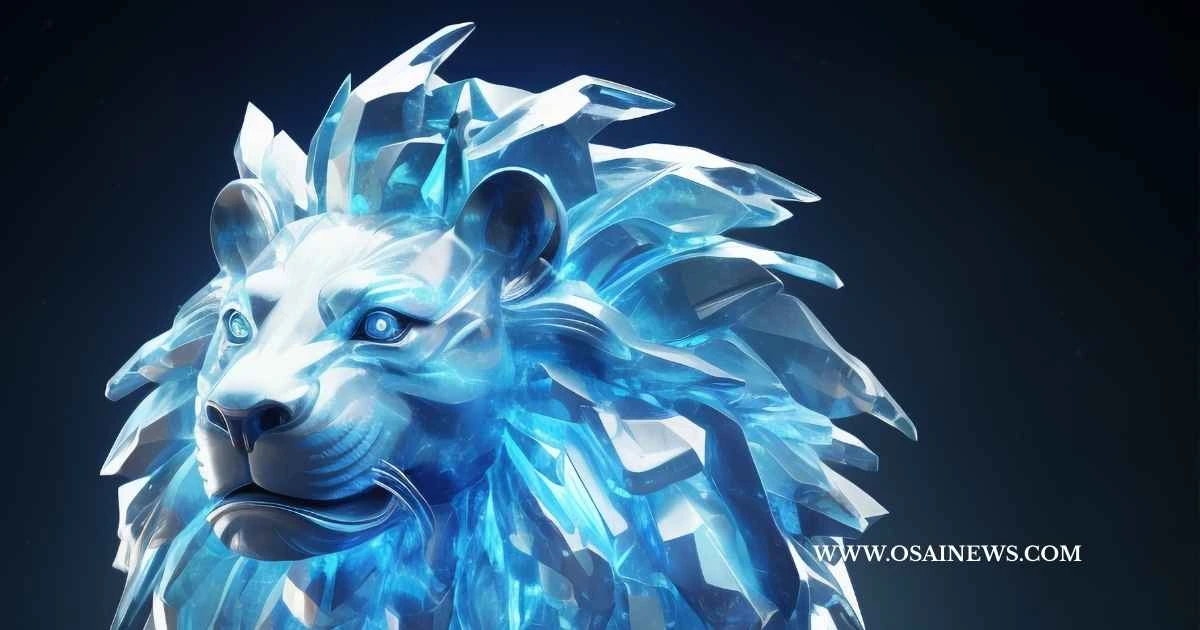
AI Image Creator Prompt Diamond Body Lion Walking (Stunning Results)
Table of Contents
Picture yourself standing before a canvas of infinite possibilities, where your wildest creative visions can materialize with nothing more than carefully chosen words. I still remember the first time I attempted to conjure a majestic lion with a body of pure diamond—the frustration of watching AI generate everything except what danced so vividly in my imagination. Maybe you’ve felt that same exasperation, typing prompt after prompt, only to see opaque blobs or unrealistic cartoons instead of the breathtaking crystalline predator you envisioned.
Here’s the truth: generating a photorealistic walking lion with a diamond-textured body isn’t about luck or endless trial and error. It’s about understanding the language AI speaks and crafting prompts that translate your vision into digital reality. Today, you’ll discover exactly how to bridge that frustrating gap between imagination and creation.
Understanding AI Image Generation and Diamond Textures
What Makes Creating a ai image creator prompt diamond body lion walking?
When you combine the raw power of nature’s apex predator with the ethereal beauty of crystalline structures, something magical happens. The walking lion with a diamond body represents more than just an artistic experiment—it’s where organic movement meets geometric perfection, where strength becomes translucent elegance.
Current data from leading AI platforms shows that gemstone-textured animals rank among the most challenging yet rewarding subjects for digital artists. Why? Because you’re asking AI to reconcile two fundamentally different concepts: the fluid anatomy of a living creature and the rigid, faceted structure of precious stones.
The visual appeal stems from contrast. A lion embodies raw, muscular power—every sinew designed for the hunt. Diamonds represent clarity, precision, and untouchable beauty. When you successfully merge these elements, you create an image that stops viewers mid-scroll, compelling them to look deeper into the refracted light dancing across crystal muscles.
How AI Interprets Your Diamond Texture Requests
Understanding your AI tool’s interpretation process transforms your results dramatically. When you type “diamond body,” the system doesn’t actually “see” anything. Instead, it analyzes millions of images tagged with similar descriptors, identifying patterns in how light behaves on diamond surfaces, how facets create geometry, and how transparency reveals depth.
Your prompt serves as a blueprint, but here’s where creators stumble: vague descriptions produce vague results. Writing “make it look like diamond” leaves vast room for interpretation. Does that mean opaque and sparkly? Completely transparent? Angular or smooth? The AI doesn’t know unless you specify.
Think of prompt writing as giving directions to someone who’s never seen a diamond or a lion. You wouldn’t just say “go to the store”—you’d provide street names, landmarks, and specific turns. Apply this same precision to your image generation, and watch your results sharpen dramatically.
Essential Components of Your Perfect Diamond Lion Prompt
Breaking Down the Core Elements
Every successful AI image creator prompt for a diamond body lion walking needs seven foundational components working in harmony. Miss even one, and your vision crumbles like poorly cut glass.
Subject Clarity forms your foundation. “Lion” alone invites countless interpretations—male or female? Age? Expression? Specify “majestic male African lion” to eliminate ambiguity immediately.
Action Definition breathes life into static concepts. “Walking” differs vastly from “walking forward with left paw raised mid-stride.” The latter creates dynamic tension and authentic movement that elevates your entire composition.
Material Properties separate mediocre attempts from jaw-dropping successes. This is where your diamond description lives, and it demands obsessive attention. You’ll need to address transparency (“completely see-through”), surface quality (“precision-cut facets”), and internal structure (“visible depth with light refraction”).
Light Interaction makes or breaks diamond realism. Without explicit instructions about how light behaves—”prismatic dispersion creating rainbow effects” or “caustic patterns from internal reflections”—you’ll generate dull, lifeless crystals that might as well be painted glass.
Environmental Context grounds your creation. A simple black background emphasizes the diamond’s brilliance, while a savanna sunset adds warmth and narrative depth. Choose deliberately based on your vision’s emotional core.
Style Direction prevents unwanted artistic interpretation. “Photorealistic” yields vastly different results than “watercolor painting style” or “cartoon.” Be explicit about the aesthetic universe you’re creating within.
Technical Specifications ensure quality meets your standards. Terms like “8K resolution,” “sharp focus throughout,” and “hyperdetailed” signal that you demand excellence, not rough sketches.
The Diamond Texture Description Framework
Creating convincing diamond textures requires you to think like a gemologist and photographer simultaneously. Start with material transparency—is your lion completely see-through like flawless crystal, or does it have translucent depth that hints at internal structure?
Surface characteristics determine believability. Real diamonds feature precisely angled facets that catch and redirect light in predictable patterns. Including phrases like “brilliant-cut geometry,” “angular crystal planes defining musculature,” or “faceted surfaces with sharp edges” helps AI understand the exact texture you’re pursuing.
Light behavior separates amateur attempts from professional results. Diamonds don’t just sparkle—they refract, creating rainbow dispersion called “fire.” They generate caustic patterns (those dancing light projections you see when sunlight hits crystal). They produce internal reflections that create visual depth. Describe these phenomena explicitly: “light entering the diamond body, refracting through crystal structure, emerging as rainbow prisms.”
Color and clarity add the final polish. Even “colorless” diamonds have subtle warm or cool tones. Fancy colored diamonds—blue, pink, yellow—each create distinct moods and require specific color descriptors in your prompt.
Your Step-by-Step Prompt Writing Guide
Starting Simple: The Beginner’s Approach
If you’re new to AI image generation, complexity breeds confusion. Your first diamond lion prompt should nail the basics before attempting advanced techniques.
Try this foundation: “A powerful lion walking forward, entire body made of transparent diamond with geometric facets, light creating rainbow prisms through the crystal body, photorealistic style, simple black background.”
This 25-word prompt covers every essential element without overwhelming the AI or yourself. It specifies the subject (powerful lion), action (walking forward), material (transparent diamond with geometric facets), light behavior (rainbow prisms), style (photorealistic), and environment (black background).
Generate four variations with this prompt. Study what works and what doesn’t. Does the lion look too opaque? Add “completely see-through” or “glass-like transparency.” Missing sparkle? Insert “brilliant light refraction” or “catching light like a gemstone.”
Elevating to Intermediate: Adding Strategic Details
Once you’ve grasped the basics, intermediate prompts introduce precision that transforms good into great. You’ll expand your descriptions while maintaining clarity—no rambling or redundant phrases.
Consider this evolved version: “Majestic male African lion in mid-stride walking pose, muscular body constructed entirely from flawless transparent diamond material with brilliant-cut facets, each muscle group articulated through crystal plane geometry, golden mane transformed into amber-tinted diamond strands, dramatic side lighting creating prismatic rainbow effects and caustic light patterns, photorealistic rendering, matte black background, 8K resolution.”
Notice how this 58-word prompt maintains structure while adding layers of specificity. You’ve defined the lion’s gender and species, detailed the walking pose, described how muscles appear through crystal structure, addressed the mane separately, specified lighting angle and effects, and included quality markers.
The magic happens when you describe how diamond properties interact with lion anatomy. Phrases like “muscle groups articulated through crystal planes” tell AI to maintain realistic anatomy while applying diamond texture—not just slapping sparkles on a generic lion shape.
Mastering Advanced Techniques: Professional-Level Prompts
Advanced prompts separate creators who generate impressive images from those who produce portfolio-worthy masterpieces. At this level, you’ll orchestrate every visual element with surgical precision.
Here’s a professional-grade example: “Hyperrealistic 3D render of a magnificent male African lion captured mid-stride with left foreleg raised, powerful forward momentum visible in tensed musculature, entire anatomical structure constructed from D-grade flawless colorless diamond featuring precision brilliant-cut faceting, muscular definition achieved through perfectly aligned geometric crystal planes, tendons appearing as internal diamond striations with subtle light scattering.
majestic mane composed of warm champagne-colored diamond filaments that flow naturally while maintaining crystalline quality, eyes retaining natural feline amber color with diamond corneas creating depth, dramatic Rembrandt lighting from 45-degree front-left creating complex caustic patterns and prismatic rainbow dispersion throughout transparent body, visible internal refraction demonstrating depth and three-dimensionality, ground contact creating subtle light diffusion at paw interfaces, set against infinite matte black void for maximum luminous contrast, shot with macro photography sharpness showing every facet edge, 16K resolution, path-traced rendering, no motion blur, crystalline focus throughout.”
This 141-word masterwork leaves virtually nothing to AI interpretation. You’ve specified diamond grade, cut type, exact pose details, lighting angle and style, color for different body parts, technical rendering method, and even how paws interact with ground light.
Platform-Specific Optimization Strategies
Tailoring Prompts for Midjourney Success
Midjourney thrives on concise, evocative language paired with technical parameters. Your diamond lion prompt should balance poetic description with precise technical commands.
Structure your Midjourney prompt like this: “[Core visual description] [lighting and atmosphere] [style references] –v 6 –ar 16:9 –style raw –s 250”
Example: “Majestic lion walking through darkness, body sculpted from transparent faceted diamond, light refracting into prismatic rainbows, dramatic studio lighting, National Geographic quality meets luxury jewelry photography –v 6 –ar 16:9 –style raw –s 250”
The parameters matter enormously. “–v 6” accesses Midjourney’s latest photorealism capabilities. “–style raw” reduces artistic interpretation, keeping results closer to your literal description. “–s 250” balances stylization—lower numbers (50-150) create photographic realism, while higher values (500-1000) add artistic flair.
Optimizing for DALL-E 3’s Natural Language Processing
DALL-E 3 excels when you write conversationally, almost as if explaining your vision to a friend. Forget cryptic keyword stacking—this platform rewards clear, natural sentences.
Your diamond lion prompt might read: “Create a photorealistic image showing a powerful lion walking from left to right across the frame. The lion’s entire body should be made of perfectly clear, transparent diamond with geometric facets like a cut gemstone. As light passes through the diamond body, it should create beautiful rainbow prisms and reflections. You should be able to see through the lion’s body, with the muscular structure visible through the crystal surface. Place the lion against a simple dark background so the diamond sparkles really stand out.”
This conversational 86-word prompt works because DALL-E 3 processes context and intent, not just keywords. You’re painting a picture with words rather than issuing commands.
Conquering Stable Diffusion’s Complexity
Stable Diffusion rewards technical precision and weighted keywords. You’ll use parentheses and numerical weights to emphasize critical elements while employing negative prompts to eliminate common problems.
Format your prompt with emphasis weights: “(masterpiece, best quality:1.4), walking male lion, (entire body made of transparent diamond crystal:1.5), (brilliant-cut geometric facets:1.3), (prismatic rainbow light refraction:1.4), anatomically correct feline musculature, dramatic chiaroscuro lighting, infinite black background, (photorealistic:1.3), 8K, hyperdetailed”
The numbers in parentheses tell Stable Diffusion what matters most. A weight of 1.5 makes “transparent diamond crystal” significantly more important than unweighted elements. This prevents the AI from deprioritizing critical features.
Equally important: your negative prompt. “blurry, low quality, cartoon, anime, distorted anatomy, opaque body, flat lighting, dull surface, unrealistic proportions, out of focus, pixelated, abstract” explicitly tells the AI what to avoid.
Troubleshooting Common Diamond Lion Challenges
When Your Lion Appears Solid Instead of Transparent
This ranks as the most frequent complaint. You’ve written “diamond body,” yet your generated lion looks like it’s carved from opaque stone. The problem? Insufficient transparency emphasis.
Fix this by stacking transparency descriptors: “completely transparent, perfectly clear like glass, see-through body showing internal structure, light passing completely through crystal form.” Don’t rely on “diamond” alone to convey transparency—many diamonds appear translucent or even opaque depending on clarity and cut.
Add light behavior specifics: “light entering from one side, traveling through the transparent body, exiting the opposite side with rainbow dispersion.” This describes the physics of transparency, giving AI concrete visual data to replicate.
Eliminating Cartoon-Like or Unrealistic Results
If your diamond lions look more like video game characters than photorealistic creations, your style descriptors need reinforcement. Generic terms like “realistic” often fail to override AI’s default artistic tendencies.
Replace weak style terms with powerful alternatives: “photographed with Phase One medium format camera, National Geographic wildlife photography quality, shot on 70mm film, hyperrealistic 3D render, octane render quality, path-traced lighting.”
These technical references anchor AI to photographic realism rather than artistic interpretation. They signal professional standards rather than casual sketches.
Fixing Anatomical Distortions
Diamond texture shouldn’t compromise lion anatomy, yet this balance proves tricky. You might see stretched limbs, misshapen heads, or bizarre proportions when AI focuses too heavily on crystalline structure.
Counter this by strengthening anatomical keywords: “anatomically perfect African lion, realistic wildlife proportions, accurate feline musculature, natural cat bone structure, biologically correct form.” Place these descriptors early in your prompt to establish anatomical accuracy before adding diamond properties.
Consider splitting your description: first establish the lion (“perfectly proportioned male lion in natural walking gait”), then apply the material (“entire form transformed into transparent diamond while maintaining exact anatomical structure”).
Expanding Your Creative Possibilities
Exploring Colored Diamond Variations
Clear diamonds create stunning effects, but colored variants unlock entirely new emotional territories. Blue diamonds evoke mysticism and rarity, their cool tones suggesting ice kingdoms and frozen power. Pink diamonds radiate elegance and precious femininity, perfect for creating regal, sophisticated compositions.
For a blue diamond lion, modify your prompt: “Walking lion with body constructed from deep blue diamond, Hope Diamond coloration, sapphire-tinted transparency, cool-spectrum light refraction creating blue-violet prisms, ethereal atmosphere.”
Yellow or champagne diamonds generate warmth: “Majestic lion striding forward, body made of intense yellow diamond, golden amber transparency, warm light dispersion creating honey-toned prisms, powerful yet luminous presence.”
Black diamonds flip the entire concept, creating dramatic opacity with subtle sparkle: “Powerful male lion walking, body carved from black diamond, opaque dark crystal with mysterious internal sparkle, rim lighting revealing edges, dramatic contrast against light background.”
Environmental and Stylistic Variations
Your diamond lion doesn’t exist in a vacuum—the environment dramatically affects perception and impact. A black studio background emphasizes raw beauty and technical perfection, allowing every facet and light ray to command attention without distraction.
Alternatively, placing your crystal lion in a natural savanna sunset creates narrative: “Diamond-bodied lion walking across African grassland at golden hour, crystalline form catching and amplifying sunset oranges and purples, atmospheric perspective, story-driven composition.”
Gallery presentation transforms your creation into fine art: “Museum-quality diamond lion sculpture in white cube gallery space, professional art installation lighting, viewers visible in soft focus background, contemporary art photography.”
Each environment serves different purposes. Choose based on whether you’re creating portfolio art, commercial imagery, or personal expression.
Your Path Forward: From Prompt to Masterpiece
You’ve now absorbed the complete framework for generating breathtaking AI images of walking lions with diamond-textured bodies. The journey from blank prompt box to jaw-dropping creation no longer seems mysterious or frustrating—you understand the mechanics, the language, and the techniques that bridge imagination and reality.
Start simple if you’re new to this. Use the beginner prompt structure, generate your first batch, and analyze what works. Don’t aim for perfection on attempt one—aim for learning. Each generation teaches you something about how your chosen AI platform interprets your words.
As you grow comfortable, layer in intermediate details. Specify lighting angles. Describe how facets align with muscle groups. Add color variations to experiment with emotional impact. See your results grow from ‘nice’ to ‘wow, I actually made this.
Eventually, you’ll craft advanced prompts that orchestrate every visual element with precision, generating images worthy of professional portfolios and commercial projects. You’ll develop an intuitive sense for which descriptors produce specific effects, building a personal library of proven techniques.
The diamond-bodied lion you imagined—the one that seemed impossible to capture—is entirely within your grasp. You have the knowledge. You understand the process. Now comes the exhilarating part: creation.
Open your AI platform right now. Start with one of the prompts from this guide—modify it to match your unique vision. Generate your first crystalline lion and share your results. Join communities of AI artists, learn from each iteration, and discover that the only limit is how precisely you can articulate what you see in your mind’s eye. Your masterpiece awaits. Create it today.